

Opens in a new tab

Same‑week appointments in Derby & Long Eaton.

Foot & heel pain — causes, fixes & when to see a physio

Whether it’s first‑step heel pain in the morning, a burning arch ache on long walks, ball‑of‑foot pain in tighter shoes, or bunion‑related discomfort, we’ll help you understand what’s going on and get you moving again.

Rachel Royer

Reviewed by Rachel Royer, HCPC-registered physiotherapist and CSP member
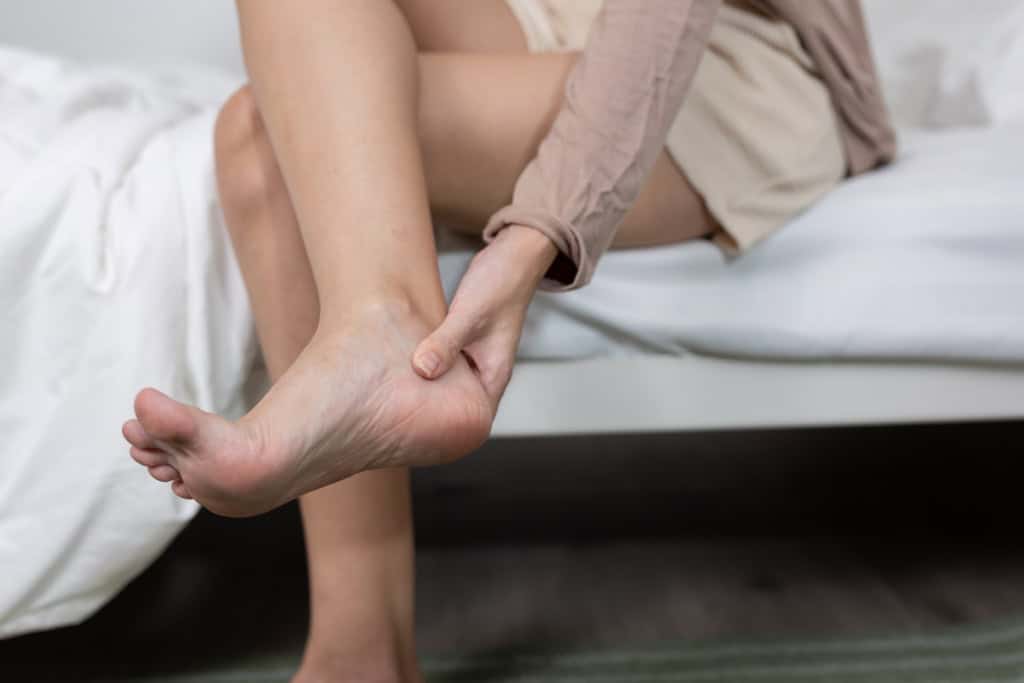
Woman sitting on the edge of her bed, holding her sore heel

Quick answers

  • Should I rest completely?

    Not usually. Relative rest + progressive loading helps most foot and heel problems more than full rest.

  • Do I need a scan?

    Often no. Plantar heel pain, metatarsalgia and many bunion‑related issues are diagnosed clinically. Imaging is considered if symptoms persist, a stress fracture is suspected, or surgery is being considered.

  • How long until it improves?

    Plantar fasciitis and Achilles‑insertion/heel pain typically respond over 8–12+ weeks of consistent loading and pacing; forefoot pain can improve sooner with load and footwear changes.

Common symptoms and patterns

  • First‑step heel pain in the morning or after sitting; eases with gentle movement; returns after longer walks.
  • Arch ache or cramping on hills/long days.
  • Burning/aching at the ball of the foot (metatarsalgia), worse in tighter shoes or after a surge in running volume.
  • Bunion‑area pain at the big‑toe joint, aggravated by narrow shoes and long standing.
  • Pain at the back of the heel, where the Achilles tendon attaches? See Ankle.

Try this now: safe self-care

Do

  • Short, frequent walks; avoid massive spikes in steps while symptoms settle.
  • Calf raises (start double‑leg → progress to single as tolerated) and foot intrinsic work (toe yoga, towel scrunches).
  • Consider temporary insoles/heel cup or a slightly more supportive shoe if it reduces symptoms.

Avoid (for now)

  • Big jumps in hills, load or time on feet; long standing in unsupportive footwear.
  • Repeated barefoot miles on hard floors in an irritable phase.

If you’re unsure, book an assessment — we’ll tailor this to your goals.

Book an assessment

When to see us

  • Pain isn’t improving after 7–10 days of sensible changes.
  • Night pain, swelling, or inability to weight‑bear after a minor twist or new training block (we’ll screen for stress injury).
  • Ongoing bunion pain limiting shoes/work despite self‑care.

Ready to get moving?

Same-week appointments at Long Eaton, Pride Park, and Kedleston Road. Prefer to be seen at home? We also offer home visits across Nottingham & Derby. Book an appointment online or call 0115 972 1319.

How we help

  1. Step 1: Assess

    Plantar fascia vs fat‑pad vs Achilles‑insertion; arch/forefoot load; footwear and activity review; stress‑injury screen.

  2. Step 2: Plan

    Progressive loading (calf/foot strength → tolerance → plyometric capacity if needed), pacing, footwear tweaks, and flare‑up strategies.

  3. Step 3: Return

    Criteria‑based return to longer walks/runs/standing, with simple measures you can track.
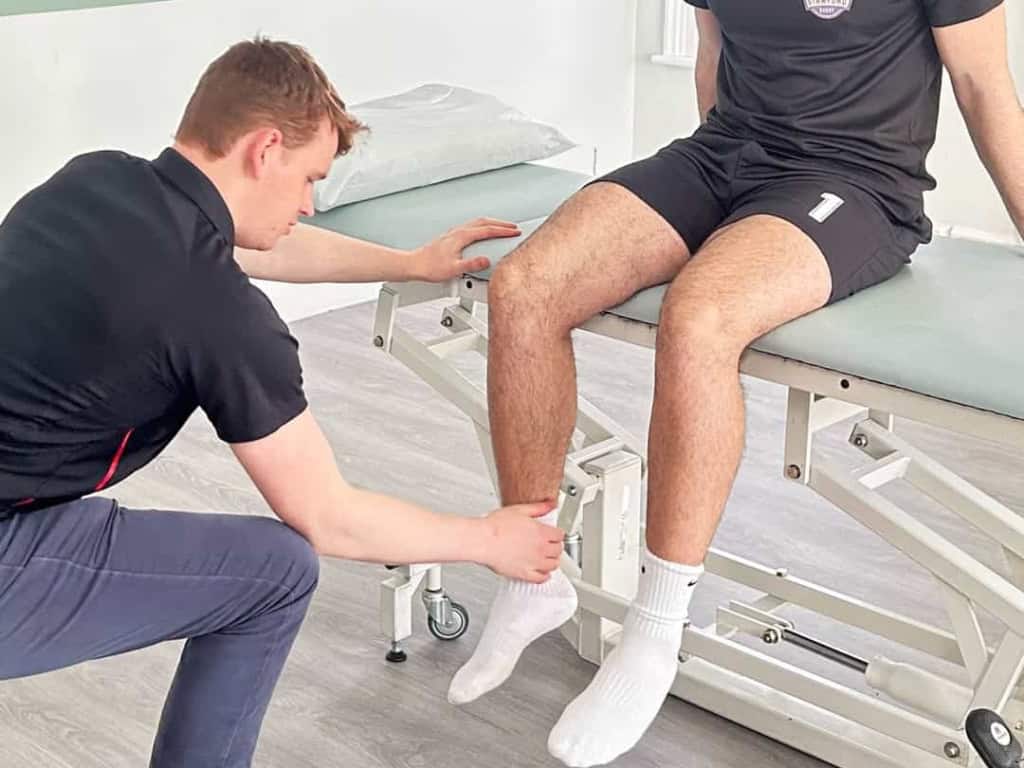
Physiotherapist examining a seated patient's ankle and foot

We also offer PhysiotherapyAcupunctureMassage as part of your plan — always alongside active rehab.

Did you know? We also run Pilates, Yoga and Strength & Conditioning classes at our Long Eaton clinic, and Tai Chi in Toton.

Foot & heel conditions and symptoms

  • Likely causes

    Irritation of the plantar fascia at its heel attachment; often driven by load spikes and calf/foot capacity.

    What helps

    • Foot intrinsic work (toe yoga, short‑foot drills), calf raises within comfort, and graded walking.
    • Consider a temporary insole/heel cup for symptom relief; supportive footwear for longer days.

    How physio helps

    • Progressive loading plan for fascia and calf; step/standing pacing; footwear advice; criteria‑based return to distance.

    Quick questions

    Do I need a scan?
    Usually no; diagnosis is clinical unless symptoms are atypical or persist despite good rehab.
    Should I stop walking?
    No — organise shorter, frequent walks, then build distance as symptoms calm.
    Night splints/orthotics?
    Can help some; best used alongside strengthening and load management.
    Timeline?
    8–12+ weeks is common; stubborn cases take longer but still improve with consistent loading.
    Rolling on a ball — helpful?
    It can soothe symptoms; the main driver of change is strength + pacing.

    Ready to get moving?

    Book onlineCall 0115 972 1319
  • Likely causes

    Foot intrinsic and calf fatigue vs load; sometimes footwear mismatch.

    What helps

    • Toe yoga, towel scrunches, short‑foot holds; calf raises; adjust walking time/terrain temporarily.

    How physio helps

    • Progressive strength & endurance for arch/ calf; footwear and pacing tweaks; gradual exposure to hills.

    Quick questions

    Should I change shoes?
    Comfort guides choice. A slightly more supportive shoe can help while you build strength.
    Barefoot training?
    Small amounts on friendly surfaces can be fine once symptoms settle; progress gradually.
    When will it improve?
    Often within 4–8 weeks with consistent capacity work.

    Ready to get moving?

    Book onlineCall 0115 972 1319
  • Likely causes

    Local overload of the metatarsal heads; sometimes a Morton’s neuroma component or toe‑off mechanics.

    What helps

    • Temporarily reduce high‑heel or narrow‑toe‑box shoes; try a metatarsal pad or roomier footwear.
    • Calf/foot strength and toe‑off control; vary running routes/surfaces.

    How physio helps

    • Load redistribution (pads/footwear), capacity build, and gait tweaks; return‑to‑run criteria.

    Quick questions

    Are insoles needed?
    Sometimes temporary pads/insoles relieve symptoms while you build strength.
    Can I keep running?
    Often yes with route/shoe tweaks and a graded plan; avoid tight bends/hard camber initially.
    When to escalate?
    If numbness spreads or pain persists, we’ll discuss imaging/ortho review.

    Ready to get moving?

    Book onlineCall 0115 972 1319
  • Likely causes

    Local joint irritation and soft‑tissue sensitivity; strength/endurance mismatch in foot/calf.

    What helps

    • Roomier footwear; short‑term bunion cushions for comfort.
    • Toe strengthening (big‑toe press, toe spread) and calf raises.

    How physio helps

    • Capacity & comfort: strength/endurance work, footwear strategies and pacing; onward opinion if deformity/pain progresses.

    Quick questions

    Do I need surgery?
    Only if pain/function remain limited despite good conservative care; we can coordinate a surgical opinion.
    Can exercises change the bunion?
    They won’t change bone shape, but they can improve comfort and function.
    What shoes are best?
    Comfortable, wider toe‑box shoes; avoid persistent narrow/pointed styles during flares.

    Ready to get moving?

    Book onlineCall 0115 972 1319
  • Likely causes

    Thickening/irritation of a digital nerve between metatarsal heads — often linked to toe‑box compression and forefoot load.

    What helps

    • Choose a wider toe‑box shoe; consider a metatarsal dome/pad to spread pressure.
    • Reduce longer/harder walks temporarily; practise gentle toe‑spread and foot intrinsic strength.

    How physio helps

    • Gait and footwear advice; load redistribution plus strength for foot/ankle; pacing for walking/running.

    Quick questions

    Do I need a scan?
    Diagnosis is often clinical; ultrasound may confirm in persistent cases.
    Are injections helpful?
    Can provide short‑term relief in some cases; best used alongside offloading and strength.
    Can I keep running?
    Often yes with footwear/route tweaks and graded time; avoid tight bends or highly cambered routes early on.

    Ready to get moving?

    Book onlineCall 0115 972 1319
  • Likely causes

    Stress reaction/injury from cumulative overload.

    What helps

    • Stop impact loading and seek assessment. Do not push through bone pain.
    • Switch to non‑impact cardio (bike/pool) and use supportive footwear; avoid tight forefoot compression.

    How physio helps

    • Early recognition and onward imaging/GP referral if indicated; protect while we maintain fitness; graded return plan once cleared.

    Quick questions

    Do I need an X‑ray or MRI?
    Early X‑rays can be normal; MRI is more sensitive for stress injury. We’ll coordinate with your GP/consultant.
    How long off running?
    Varies by site/severity; we use criteria‑based progress (pain‑free walking, hop test, imaging where relevant) before re‑loading.
    Risk factors?
    Rapid training spikes, low energy availability, sudden footwear changes, and hard surfaces. We’ll address these to prevent recurrence.

    Ready to get moving?

    Book onlineCall 0115 972 1319

Insurance and funding

We work with all major private health insurers, including Bupa, AXA, Aviva, Cigna, WPA and HCPA. Please check your policy for physiotherapy cover and, if needed, ask us for our provider/registration details.

We also hold NHS contracts for services in primary and secondary care.

Prefer to self-fund? You can pay for your own sessions — we’ll explain options and provide clear pricing.

See our fees
  • Bupa
  • AXA
  • Aviva
  • Cigna
  • WPA
  • HCPA

What our patients say

  • It has been life changing having physio with Fiona. She has encouraged me to work on exercises I can manage and has gradually introduced more over time.
    I now feel more confident to know how to manage my pain and have exercises to help me continue to increase my strength.
    I can not praise her enough.

    MH

  • All of the staff are really friendly and welcoming. The admin team are very efficient and accommodating. The physio care I received was excellent – very professional and thorough, with clear information given re my diagnosis and equally clear guidance on the daily exercises I needed to undertake.

    Lisa Rigley

  • The location is excellent, within the Arena which has a huge, free car park. My physio is Sally, who I have seen on and off for years, whenever I have a problem . You couldn’t wish for anyone better: she is so knowledgeable and her treatment first rate. She is also very friendly and will put you at your ease. Highly recommended!

    Betty Fleming

  • Professional, knowledgeable and friendly, the physio took the time to listen to obtain a detailed history and do an initial assessment. This ensured that the treatment I had was targeted and effective with appointments sensibly spaced. I would use Impact physios again.

    JH

  • Excellent service. appointment and easy online booking Alan my therapist listened to my explanation and problems and after an examination came up with a treatment plan. After 4 visits and at home exercises I am now pain free and also have a plan to keep further problems at bay. Would definitely recommend either Long Eaton or Derby arena.

    EB

  • Great treatment. My symptoms were listened to then my needs were well explained and an achievable programme was set which is already having a very positive effect. Feeling better already. The videos of exercises are extremely helpful too.

    Claire Haynes

Foot & heel pain: your questions answered

Book an appointment
  • Not usually. Plantar fasciitis, fat‑pad pain and many forefoot issues are diagnosed clinically. We consider imaging if: symptoms persist despite a well‑followed plan; there’s red‑flag concern (infection, inflammatory arthritis), or we suspect a stress fracture or tendon/ligament rupture.

  • Protected movement and progressive loading help most conditions. For heel pain/plantar fascia, organise shorter, frequent walks and build calf/foot strength. Long periods of full rest can reduce capacity and prolong recovery.

  • Plantar fasciitis and insertional Achilles often improve with 8–12+ weeks of loading and pacing; metatarsalgia and bunion‑related discomfort may ease within 4–8 weeks once load and footwear are adjusted. We’ll track function (first‑step pain score, walking time, shoe tolerance) as well as pain.

  • Sometimes for symptom relief; they’re most useful as a short‑term adjunct while you build strength and adjust load/footwear.

  • The most important factor is comfort. For plantar heel pain, a slightly more supportive shoe can help; for bunions, a wider toe‑box reduces irritation.

  • Often yes with route/volume tweaks and a graded plan. Start with flatter routes, reduce speed work initially, and build calf/foot strength alongside.

  • After an acute injury with inability to weight‑bear, obvious deformity, night pain with fever/redness/heat, or numbness/weakness. Call NHS 111 or seek urgent care.

Who you'll see

Our team includes HCPC‑registered physiotherapists and CSP members with experience in plantar heel pain, forefoot overload, bunion‑related discomfort and Achilles/foot tendon rehab. You’ll get a clear diagnosis, a plan that fits your life, and support back to the things you love.

Clinics and booking

Book online in three steps.

  1. Choose your clinic
  2. Choose Physiotherapy (or a named physio)
  3. Pick a time

Long Eaton

128 Derby Road, Long Eaton, Nottingham NG10 4ER

Our Long Eaton clinic is our main hub, we offer individual physio appointments and classes in our Pilates studio.

Mon-Fri: 8am – 8.30pm
Sat: 10am – 1pm


View on map (Long Eaton)Book at Long Eaton

Pride Park, Derby

Derby Arena, Royal Way, Derby DE24 8JB

Our Pride Park clinic is inside the iconic Derby Arena. Especially convenient for businesses on Pride Park.

Mon: 10am – 4pm
Tue: 8:30am – 4:30pm
Wed: 5pm – 7pm
Thu: 8am – 12pm
Fri: 7am – 4:30pm


View on map (Pride Park)Book at Pride Park

Classes run at Long Eaton (Tai Chi in Toton). See classes

Book onlineCall