




Long Eaton
128 Derby Road, Long Eaton, Nottingham NG10 4ER
Our Long Eaton clinic is our main hub, we offer individual physio appointments and classes in our Pilates studio.
Mon-Fri: 8am – 8.30pm
Sat: 10am – 1pm
Same‑week appointments in Derby & Long Eaton.
Pain around the pelvis, buttocks and tailbone is common, and most of it improves with the right exercise and a few changes to how you sit and move. Whether it’s pain low down at the back of your pelvis, a sore tailbone when you sit, a deep ache in your buttock, or stiffness that’s worst first thing, we’ll help you understand what’s going on and get you moving again.
This page covers joint and muscle pain. For pregnancy-related pelvic pain, or bladder, bowel or pelvic floor problems, see our Pelvic Health page.

Keep moving. Staying active and keeping up your daily activities helps more than rest, and long spells in bed or sitting can make things worse.
Usually not. Most pelvic, buttock and back pain is diagnosed from your symptoms and an examination. Scans are used for warning signs, a suspected fracture, or if an inflammatory condition is suspected.
Many new back and pelvic problems start to settle within about 6 weeks, and tailbone pain often eases within a few weeks. Some take longer, so if it isn’t improving, get it checked.
If you’re unsure, book an assessment — we’ll tailor this to your goals.
Book an assessmentSame-week appointments at Long Eaton, Pride Park, and Kedleston Road. Prefer to be seen at home? We also offer home visits across Nottingham & Derby. Book an appointment online or call 0115 972 1319.
AB
Patient review
I had a very good experience with the Impact Physio from the reception through diagnosis and treatment. I had full confidence in expertise of the physiotherapist Mrs Fiona Hunter and she helped very much with my piriformis syndromme. Thank you very much. Anna

Jane H.
6 years ago on Google

I was reffered by my G.P following an M.R.I of my back. Feeling so stiff and in considerable pain I was prepared to try anything. I have a complex household and committing to any appointments reguarly would normally be tricky. A positive from the pandemic meant I was to access my physio through telephone calls (don't answer "capital give me the cash") and a skype video call. I am extremely grateful to Sally for the totally professional support I received. This along with Sally's sense of humour and genuine compassion I have achieved more than I thought possible. Sally may now picture a monkey bone instead of coccyx and my past rising from a chair like the ape to man to evolution image. I am much better now! This lovely lady is so reassuring and good at keeping focus on her patients. The app that I was encouraged to download meant I could obtain my physio plan when I wanted, the helpful videos and tick charts helped me with motivation at first. If I needed to communicate inbetween sessions emailing or phoning the office was easy and always responded to quickly. I wouldn't ever hesitate to recommend Impact Physio or take up further sessions should my condition worsen. Am honestly so grateful for the whole approach!
Google review of Long Eaton
Read Jane H.’s review on Google (opens in a new tab)
Sarah
1 week ago on Google
After 11 months of struggling with a knee injury that progressed into lower back pain, I finally met Pete at Impact Physio, and I honestly can’t believe the difference! I’d been going round in circles for months, feeling better for a couple of weeks, then back to square one again. Pete gave me the reassurance and confidence I needed to focus on getting stronger and not let the pain hold me back in the gym. And boom! I can finally see light at the end of the tunnel! I genuinely feel like I’m on the road to recovery. I’m convinced I’d be fully recovered and a few grand richer if I’d met Pete when this all started last year! Can’t recommend him enough!!
Google review of Long Eaton
Read Sarah’s review on Google (opens in a new tab)
Michael M.
4 weeks ago on Google
Very pleased with my progress since i started physio.Easy to talk to and very benificial
Google review of Pride Park
Read Michael M.’s review on Google (opens in a new tab)
Benjamin D.
2 months ago on Google
I wanted to give a bit of a longer review. I saw Jo about 3 weeks ago about knee pain i'd been having. After a conversation and some diagnostics Jo was able to tell me, accurately, the inury I had and provide me loads of helpful information on treatment. I returned to see Jo today and although my knee is still painful (I have a meniscus tear which will take time to heal), lots of progress has been made and its certainly headed in the right direction. I really could not recommend Jo highly enough, she's friendly, knowledgable and has really helped me. If you're in pain or stuggling with an injuriy that won't go away – get yourself booked in you won't regret it!
Google review of Long Eaton
Read Benjamin D.’s review on Google (opens in a new tab)
Dominic M.
2 months ago on Google
I have been to Impact a number of the times over the years and the team are excellent. I recently seen Peter regarding my disc herniation and he was professional and really support offering excellent advice that has massively helped my recovery. Would recommend to anyone who needs support with their recovery journey
Google review of Long Eaton
Read Dominic M.’s review on Google (opens in a new tab)
Kirsty B.
2 months ago on Google
Great and friendly service. Alan Beers massively helped me with my frozen shoulder. Would highly recommend.
Google review of Pride Park
Read Kirsty B.’s review on Google (opens in a new tab)
Maryse W.
2 months ago on Google
The review below was prepared 7 years ago…..My views about Impact Physiotherapy haven't changed….I am still very pleased with both the Pilates classes and the physiotherapists…..almost 20 years after starting……. My husband and myself have attended Pilates classes at Impact Physiotherapy in Long Eaton for well over 10 years. We highly recommend the classes run by their physiotherapists (small groups and individual attention when it's necessary to adjust exercises because of physical injury etc). When we suffered from back and knee problems respectively, we had no hesitation in contacting Impact physiotherapists for private treatment. We were both very satisfied with the outcome: following a first meeting for medical assessment, the sessions helped us get better, offering professional treatment, plenty of advice and a programme of exercises to do at home. Although sessions are quite pricey, you don't have to wait for an appointment for very long and staff don't try to book you in for more sessions than necessary. We liked their very active approach of getting patients involved in their own recovery!
Google review of Long Eaton
Read Maryse W.’s review on Google (opens in a new tab)
Pamela H.
3 months ago on Google
After having a hip replacement I was left weak and still struggling to drive after 3 months. I went to Impact and saw Krishna. He has helped me enormously giving me strengthening and stretching exercises. Very professional service and I would highly recommend.
Google review of Long Eaton
Read Pamela H.’s review on Google (opens in a new tab)
Helen D.
3 months ago on Google
I highly recommend the Strength & Conditioning classes at Impact Long Eaton. I have suffered with Menopause aches and pains for a few years now and was beginning to struggle with moving around without moans and groans as a young 54 year old! I thought exercise was now a no go! Another menopause gift! Combined with some weight loss the Strength & Conditioning classes really helped with building my strength back up and my confidence around weights and to push myself out of my comfort zone. Our instructor Maya takes onboard any issues you may have and the session can be tailored to individual needs. There is always variety between each session and support on how to correctly perform each type of movement. Studio is always clean, tidy and welcoming with all the right equipment provided. I recently saw Julie at Derby Uni for some physio treatment and she could see immediately the difference in my body from the classes. Thank you Team Impact x
Google review of Long Eaton
Read Helen D.’s review on Google (opens in a new tab)
Mark D.
4 months ago on Google
I highly recommend the Strength & Conditioning class with Maya at Impact Physio (Long Eaton). As a physiotherapist, Maya brings expert guidance to every movement, providing complete peace of mind that you are training safely. What I Loved: Physio-Led Safety: Maya offers real-time form corrections and expert coaching. Structured Sessions: The layout flows perfectly from warm-ups to technique work and core strength. Tailored for Everyone: Exercises are easily scaled for fitness levels or injury recovery. Confidence Boosting: The supportive, clinical environment eliminates any gym intimidation. It is a fantastic, welcoming class for anyone looking to build a stronger body safely. I will definitely be back!
Google review of Long Eaton
Read Mark D.’s review on Google (opens in a new tab)
Karen S.
4 months ago on Google
Very good and friendly staff, very clean and very quick in seeiing patients to help their recovery
Google review of Long Eaton
Read Karen S.’s review on Google (opens in a new tab)
Peter G.
4 months ago on Google
I went to Chris at impact physio following hip resurfacing surgery with an aim to get running again. couldn't recommend Impact highly enough, all physio sessions, advice and exercises have really helped me get back to full fitness
Google review of Long Eaton
Read Peter G.’s review on Google (opens in a new tab)
Mandy S.
4 months ago on Google
Fantastic friendly service. Very professional and would highly recommend. Finally has really helped me not only with an exercise plan but with her explanations so I can understand my position without technical words!! I feel much more confident going forwards and can't express my gratitude enough.
Google review of Long Eaton
Read Mandy S.’s review on Google (opens in a new tab)
andrew S.
5 months ago on Google
I’ve been experiencing knee pain while running so I visited Pete Grey. He examined me thoroughly and offered some valuable tips on improving my running technique. His helpfulness, knowledge and friendly demeanour made the entire visit enjoyable. I highly recommend him and I’ll definitely return if I ever need his expertise again.
Google review of Long Eaton
Read andrew S.’s review on Google (opens in a new tab)
Phil B.
5 months ago on Google
I’ve been seeing Alan Beers for an issue I’ve had with my shoulder. He’s a great guy and extremely knowledgeable. I left the session with a good understanding of what had been going wrong and a realistic plan to manage my recovery. The results have been excellent
Google review of Pride Park
Read Phil B.’s review on Google (opens in a new tab)
Jo C.
5 months ago on Google
Jo is a very approachable, knowledgeable and experienced Physiotherapist. I learnt alot about my issue (and Physiotherapy research in general) during my visits which helped me to understand the problems I was experiencing. Jo was able to give me a physio programme that I could implement in the home very easily. I have confidence that with the continued prescribed strengthening exercises, my issues will be more manageable. Thankyou Jo for your advice, knowledge and humour! I wouldn't hesitate to recommend Jo to anyone needing evidence-based advice from a friendly and experienced Physio.
Google review of Kedleston Road
Read Jo C.’s review on Google (opens in a new tab)
Caroline
5 months ago on Google
I went to Impact with ongoing shoulder and knee pain that were hindering both gym practice and sleep. After only two sessions and some very helpful exercises (complete with videos), I was ready to be signed off. The support from Julie was warm, friendly, non-judgmental and totally encouraging from start to finish. Explanations and demonstrations were clear and gave me all I needed to know to carry out the exercises at home. Julie was very effective in helping me get back on track and I would highly recommend if considering whether it is right for you.
Google review of Long Eaton
Read Caroline’s review on Google (opens in a new tab)
Bob H.
6 months ago on Google
Had a couple of consultations with Sheridan who has helped me no end with gentle exercises to my arthritic knee No pushing or pulling just really caring support and advice Highly recommended
Google review of Long Eaton
Read Bob H.’s review on Google (opens in a new tab)
Simon H.
6 months ago on Google
Excellent care and assistance. Has made and injured should many times better. Highly recommend.
Google review of Pride Park
Read Simon H.’s review on Google (opens in a new tab)
Jane
6 months ago on Google
Great experience this pm with Jo. She was kind helpful and empathetic and happy to do hands on physio to ease my symptoms. Felt so much better after even one session.
Google review of Kedleston Road
Read Jane’s review on Google (opens in a new tab)
C L.
6 months ago on Google
After bouncing around NHS GP & Walk In Centre, finally got the expertise and care I needed here. Very knowledgable physios with the best rehab gym I’ve seen.
Google review of Kedleston Road
Read C L.’s review on Google (opens in a new tab)
Susannah
6 months ago on Google
Cannot thank Pete enough for literally getting me back up and running. Also excellent knowledge and insight into injury, arthritis, bone and muscle conditions – dispelled a number of 'myths' surrounding certain conditions.
Google review of Long Eaton
Read Susannah’s review on Google (opens in a new tab)
Rob A.
6 months ago on Google
Alan is excellent, friendly and a pleasure to visit. He has given me the exercises I need to help my knee get better. After just over a month and two sessions doing the exercises, I am getting far less pain than I was before.
Google review of Pride Park
Read Rob A.’s review on Google (opens in a new tab)
Adrian S.
6 months ago on Google
I have struggled for years with swimming related shoulder pains, despite seeing many physios. 1 appointment with Pete Gray was enough to clearly diagnose the issues and develop a rehab programme that has worked. Highly recommended.
Google review of Long Eaton
Read Adrian S.’s review on Google (opens in a new tab)
amelia
6 months ago on Google
Would 100% recommend, I've had 3 sessions with Pete, he's great at what he does, really knowledgeable and helpful, lovely guy
Google review of Long Eaton
Read amelia’s review on Google (opens in a new tab)We check your back, hips and pelvis, and how you move, sit and walk, and screen for anything that needs a doctor. Scans are rarely needed.
A tailored exercise programme to build strength and movement, with practical changes to how you sit and pace your day. Hands-on treatment is used alongside exercise, not instead of it.
A gradual return to work, sport and exercise, with a plan for what to do if it flares.
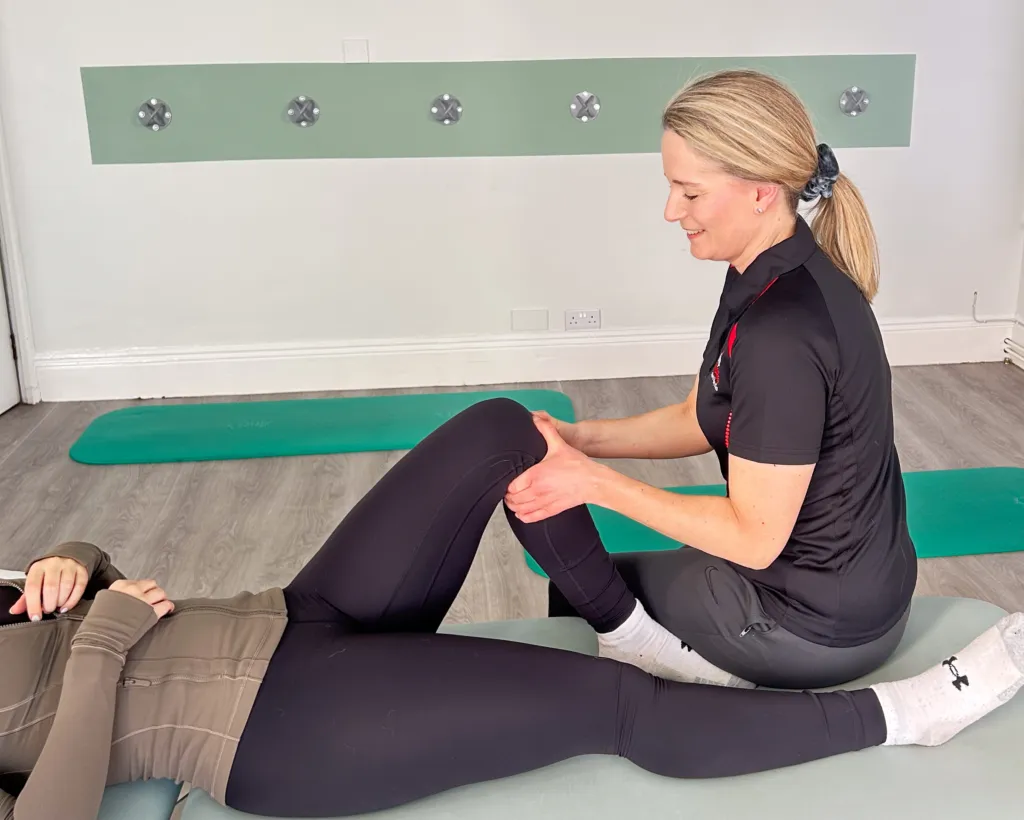
We also offer PhysiotherapyStrength & ConditioningMassage as part of your plan — always alongside active rehab.
Did you know? We also run Pilates, Yoga and Strength & Conditioning classes at our Long Eaton clinic, and Tai Chi in Toton.
Pain and stiffness low down at the back of my pelvis, on one side, that can spread into my buttock, groin or the back of my thigh. It can feel like a hip or lower back problem.
The SI joints link the base of your spine to your pelvis and pass load between your upper body and legs. Pain can come from wear and tear, an injury or a fall, or pregnancy, and sometimes there’s no clear cause. Inflammation of the SI joints can also be a sign of an inflammatory condition (see below).
Pain and tenderness at the very base of my spine, just above my buttocks. It’s a dull ache with sharp twinges, worse when I sit, stand up from a chair, bend forward or open my bowels.
Strain on the small bones at the base of the spine (the coccyx), from a fall, childbirth, long spells sitting (for example driving or cycling), or a joint that’s too stiff or too mobile. Sometimes there’s no clear cause.
A deep ache in my buttock that can spread down the back of my thigh, sometimes with tingling or burning. It’s worse sitting, especially on hard chairs or when driving, and with hills, stairs or running.
The sciatic nerve is irritated as it passes through the deep muscles of the buttock. A fall, a sudden increase in activity, running and jumping sports, or even a wallet in your back pocket can set it off.
A deep, localised pain at my sitting bone, at the top of the back of my thigh. It’s worse when I sit for a while, or after running or sport.
The hamstring tendons have been overloaded where they attach to the sitting bone, for example by running, sprinting or sports with lots of changes of direction, or by a sudden increase in activity.
My lower back and buttocks have been painful and stiff for more than 3 months. It’s worse in the morning and at night, often waking me in the second half of the night, and it eases with exercise but not with rest. The buttock pain may switch sides.
A long-term inflammatory condition affecting the spine and SI joints, which includes ankylosing spondylitis. It usually starts between the ages of 18 and 40 and affects women as often as men. Normal blood tests or X-rays don’t rule it out.
We work with all major private health insurers, including Bupa, AXA, Aviva, Cigna, WPA and Simplyhealth. Please check your policy for physiotherapy cover and, if needed, ask us for our provider/registration details.
We also hold NHS contracts for services in primary and secondary care.
Prefer to self-fund? You can pay for your own sessions — we’ll explain options and provide clear pricing.


Our team includes HCPC-registered physiotherapists and CSP members with experience in back, pelvic and buttock pain, including physiotherapists who also teach Pilates. You’ll get a clear diagnosis, a plan that fits your life, and support back to the things you love.
Book online in three steps.
128 Derby Road, Long Eaton, Nottingham NG10 4ER
Our Long Eaton clinic is our main hub, we offer individual physio appointments and classes in our Pilates studio.
Mon-Fri: 8am – 8.30pm
Sat: 10am – 1pm
Derby Arena, Royal Way, Derby DE24 8JB
Our Pride Park clinic is inside the iconic Derby Arena. Especially convenient for businesses on Pride Park.
Mon: 10am – 4pm
Tue: 8.30am – 4.30pm
Wed: 5pm – 7pm
Thu: 8am – 12pm
Fri: 7am – 4.30pm
University of Derby Sports Centre, Kedleston Road, Derby DE22 1GB
Ideally situated in the Human Performance Unit (HPU), you can benefit from the gym and indoor running track
Mon: 8am – 6.30pm
Tue: 7.30am – 3.30pm
Wed: 8am – 4pm
Thu: 8am – 8pm
Fri: 1pm – 4pm
Classes run at Long Eaton (Tai Chi in Toton). See classes