




Long Eaton
128 Derby Road, Long Eaton, Nottingham NG10 4ER
Our Long Eaton clinic is our main hub, we offer individual physio appointments and classes in our Pilates studio.
Mon-Fri: 8am – 8.30pm
Sat: 10am – 1pm
Same‑week appointments in Derby & Long Eaton.
Pain around the pelvis, buttocks and tailbone is common, and most of it improves with the right exercise and a few changes to how you sit and move. Whether it’s pain low down at the back of your pelvis, a sore tailbone when you sit, a deep ache in your buttock, or stiffness that’s worst first thing, we’ll help you understand what’s going on and get you moving again.
This page covers joint and muscle pain. For pregnancy-related pelvic pain, or bladder, bowel or pelvic floor problems, see our Pelvic Health page.

Keep moving. Staying active and keeping up your daily activities helps more than rest, and long spells in bed or sitting can make things worse.
Usually not. Most pelvic, buttock and back pain is diagnosed from your symptoms and an examination. Scans are used for warning signs, a suspected fracture, or if an inflammatory condition is suspected.
Many new back and pelvic problems start to settle within about 6 weeks, and tailbone pain often eases within a few weeks. Some take longer, so if it isn’t improving, get it checked.
If you’re unsure, book an assessment — we’ll tailor this to your goals.
Book an assessmentSame-week appointments at Long Eaton, Pride Park, and Kedleston Road. Prefer to be seen at home? We also offer home visits across Nottingham & Derby. Book an appointment online or call 0115 972 1319.
We check your back, hips and pelvis, and how you move, sit and walk, and screen for anything that needs a doctor. Scans are rarely needed.
A tailored exercise programme to build strength and movement, with practical changes to how you sit and pace your day. Hands-on treatment is used alongside exercise, not instead of it.
A gradual return to work, sport and exercise, with a plan for what to do if it flares.
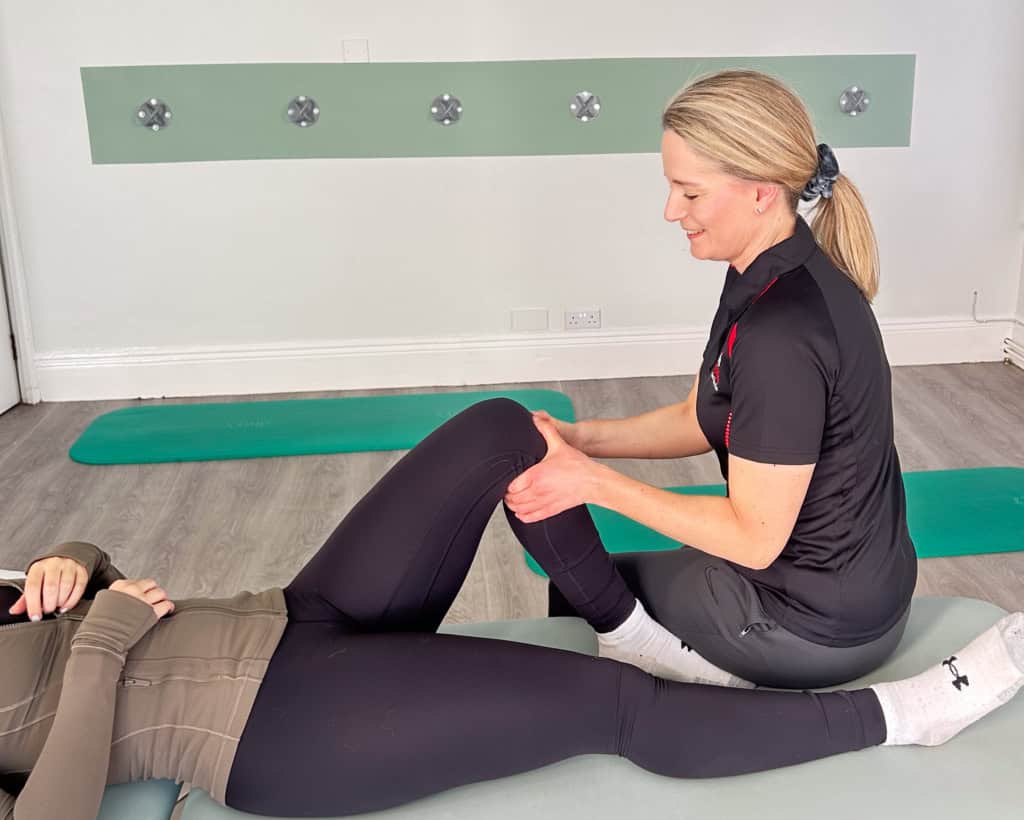
We also offer PhysiotherapyStrength & ConditioningMassage as part of your plan — always alongside active rehab.
Did you know? We also run Pilates, Yoga and Strength & Conditioning classes at our Long Eaton clinic, and Tai Chi in Toton.
Pain and stiffness low down at the back of my pelvis, on one side, that can spread into my buttock, groin or the back of my thigh. It can feel like a hip or lower back problem.
The SI joints link the base of your spine to your pelvis and pass load between your upper body and legs. Pain can come from wear and tear, an injury or a fall, or pregnancy, and sometimes there’s no clear cause. Inflammation of the SI joints can also be a sign of an inflammatory condition (see below).
Pain and tenderness at the very base of my spine, just above my buttocks. It’s a dull ache with sharp twinges, worse when I sit, stand up from a chair, bend forward or open my bowels.
Strain on the small bones at the base of the spine (the coccyx), from a fall, childbirth, long spells sitting (for example driving or cycling), or a joint that’s too stiff or too mobile. Sometimes there’s no clear cause.
A deep ache in my buttock that can spread down the back of my thigh, sometimes with tingling or burning. It’s worse sitting, especially on hard chairs or when driving, and with hills, stairs or running.
The sciatic nerve is irritated as it passes through the deep muscles of the buttock. A fall, a sudden increase in activity, running and jumping sports, or even a wallet in your back pocket can set it off.
A deep, localised pain at my sitting bone, at the top of the back of my thigh. It’s worse when I sit for a while, or after running or sport.
The hamstring tendons have been overloaded where they attach to the sitting bone, for example by running, sprinting or sports with lots of changes of direction, or by a sudden increase in activity.
My lower back and buttocks have been painful and stiff for more than 3 months. It’s worse in the morning and at night, often waking me in the second half of the night, and it eases with exercise but not with rest. The buttock pain may switch sides.
A long-term inflammatory condition affecting the spine and SI joints, which includes ankylosing spondylitis. It usually starts between the ages of 18 and 40 and affects women as often as men. Normal blood tests or X-rays don’t rule it out.
We work with all major private health insurers, including Bupa, AXA, Aviva, Cigna, WPA and HCPA. Please check your policy for physiotherapy cover and, if needed, ask us for our provider/registration details.
We also hold NHS contracts for services in primary and secondary care.
Prefer to self-fund? You can pay for your own sessions — we’ll explain options and provide clear pricing.


Usually not. Most pelvic, buttock and back pain is diagnosed from your symptoms and an examination, and scans often show changes that are common in people without pain. Scans are used for warning signs, a suspected fracture, or a possible inflammatory condition.
Keep moving. Staying active and keeping up your daily activities helps recovery. Avoid long spells in bed or sitting: moving may hurt at first, but it isn’t harmful.
Many new back and pelvic problems start to settle within about 6 weeks, with the biggest change early on, and tailbone pain often eases in a few weeks. There’s no set timescale for SI joint or deep buttock pain, so we’ll track your progress and adjust your plan.
NICE doesn’t recommend belts or corsets for low back pain. In pregnancy a soft support belt can sometimes help, and your midwife or a specialist physio can advise.
Hands-on treatment can help some people, but it works best as part of a plan that includes exercise.
Change position often and don’t sit for long. For tailbone pain, use a coccyx cushion. For deep buttock pain, cushion hard seats, avoid sitting with your knees higher than your hips, and empty your back pockets.
There isn’t one best position or mattress for back pain, so go with what’s comfortable. With tailbone pain, lying on your side often helps.
Yes. Exercise is one of the most helpful treatments, and no single type has been shown to be best, so choose something you’ll keep up. Walking, swimming, yoga and Pilates can all help.
Not usually for everyday back pain. Injections are sometimes used for tailbone pain that isn’t settling, or by a specialist to confirm where SI joint pain is coming from.
Yes. Pain from the lower back or hip is often felt in the buttock, groin or thigh, and sciatica usually affects the buttock and the back of one leg. We’ll check where it’s coming from.
Pelvic girdle pain in pregnancy and after birth is looked after by specialist pelvic health physiotherapists. Speak to your midwife or GP as early as you can, as they can refer you. Our Pelvic Health page has the latest on our own service.
It’s worth checking with your GP if your back or buttock pain has lasted more than 3 months, started before 45, is worse with rest and better with exercise, comes with morning stiffness of 30 minutes or more, or wakes you in the night.
Call 999 or go to A&E if you have numbness around your bottom or genitals, new bladder or bowel problems, or pain, numbness or weakness in both legs. Do the same if you have severe hip or pelvic pain after a fall and can’t walk or put weight on your leg.
Our team includes HCPC-registered physiotherapists and CSP members with experience in back, pelvic and buttock pain, including physiotherapists who also teach Pilates. You’ll get a clear diagnosis, a plan that fits your life, and support back to the things you love.
Book online in three steps.
128 Derby Road, Long Eaton, Nottingham NG10 4ER
Our Long Eaton clinic is our main hub, we offer individual physio appointments and classes in our Pilates studio.
Mon-Fri: 8am – 8.30pm
Sat: 10am – 1pm
Derby Arena, Royal Way, Derby DE24 8JB
Our Pride Park clinic is inside the iconic Derby Arena. Especially convenient for businesses on Pride Park.
Mon: 10am – 4pm
Tue: 8:30am – 4:30pm
Wed: 5pm – 7pm
Thu: 8am – 12pm
Fri: 7am – 4:30pm
University of Derby Sports Centre, Kedleston Road, Derby DE22 1GB
Ideally situated in the Human Performance Unit (HPU), you can benefit from the gym and indoor running track.
Mon: 8am – 6.30pm
Tue: 7:30am – 3.30pm
Wed: 8am – 4pm
Thu: 8am – 8pm
Fri: 1pm – 4pm
Classes run at Long Eaton (Tai Chi in Toton). See classes